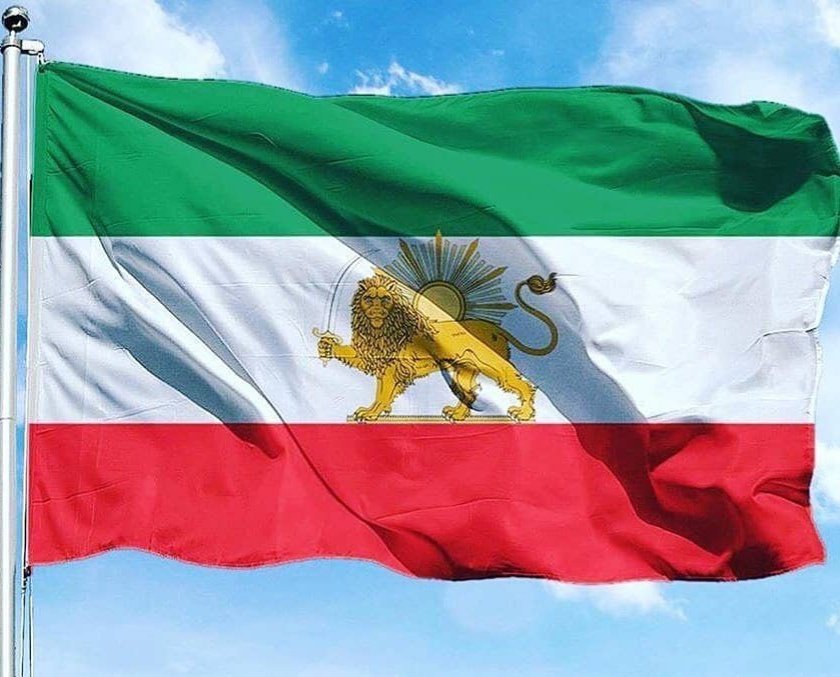
To the average American observer, “Iran” is a word draped in shadows—a montage of burning flags, stern clerics in dark robes, and the constant drumbeat of geopolitical hostility. But this image is a curated mask, a facade maintained by a regime that hijacked an ancient nation nearly half a century ago. To truly understand Iran, one must dismantle the misconception that it is just another “Middle Eastern” country. It is, in fact, a sophisticated Persian civilization currently living under a brutal, domestic occupation.
Not Arab, But Persian
The most fundamental mistake made in the West is conflating Iran with the Arabic-speaking world. While they share a geography and a religion imposed by conquest centuries ago, the similarity ends there. Iranians are Persian. They do not speak Arabic; they speak Farsi, an Indo-European language more closely related to English and Spanish than to the Semitic tongues of their neighbors.
Their history predates the Islamic era by millennia, stretching back to the Achaemenid Empire and Cyrus the Great, who penned the world’s first charter of human rights. This distinction is felt in the culture every day. While some regional neighbors have historically struggled with women’s rights, Persian women are the intellectual and professional backbone of their country. They are more likely to be university-educated than their male counterparts and have spent decades at the vanguard of the resistance. They do not seek “Westernization” so much as they seek the restoration of their own inherent, sophisticated Persian identity—one that values poetry, art, and the celebration of life.
The 1979 Theft: How the Mullahs Took a Nation
If Iranians are so progressive, how did they end up with a theocracy? The answer lies in the tragic hijacking of the 1979 Revolution. In the late 1970s, Iranians from all walks of life—students, intellectuals, and secularists—revolted against the Shah’s autocracy seeking democracy. However, Ayatollah Khomeini and his followers used the fervor of the revolution to systematically purge their secular allies.
Through a mixture of populist rhetoric and extreme violence, they established a system where the “Supreme Leader” holds ultimate authority, backed by a shadow military: the Islamic Revolutionary Guard Corps (IRGC). The IRGC is not a traditional army meant to defend borders; it is a praetorian guard designed to defend the regime from the Iranian people.
The Machinery of Brutality
The Islamic Republic is not merely a “conservative” government; it is a sophisticated, brutal occupation. The IRGC and its volunteer paramilitary wing, the Basij, maintain control through a level of state-sponsored violence that is almost incomprehensible:+1
- Targeted Blindings: During the “Woman, Life, Freedom” protests of 2022, security forces systematically fired metal pellets and paintballs into the eyes of protesters. Hundreds of young Iranians now carry the permanent physical mark of the regime’s cruelty—a blinded eye.
- The “White Torture”: In the notorious Evin Prison, prisoners are kept in absolute isolation in cells where everything—walls, floor, and food—is stark white. All sound is muffled. After weeks of total sensory deprivation, the mind shatters, facilitating coerced televised confessions.
- Sexual Violence as a Tool: Reports from the UN have detailed the systemic use of rape and sexual assault against detainees. This is used not just to inflict pain, but to “dishonor” the victim in a traditional society, forcing them into silence through shame.
- The Gallows as Theater: Iran has one of the highest execution rates in the world. The regime uses the gallows for public theater, hanging protesters from construction cranes in public squares as a warning to anyone who dares to dream of freedom.
A Land of Wine, Pomegranates, and Self-Sufficiency
Despite the regime’s efforts to paint Iran as a somber, religious monolith, the “real” Iran is a land of vibrant hedonism and incredible natural beauty. It is a common joke among Persians that while the mullahs preach austerity, the people are making wine in their basements. After all, the Shiraz grape is named after an Iranian city; viticulture is woven into the poetry of Hafiz and Khayyam.
Furthermore, Iran is a land of staggering geographic diversity. It is not a desert; it features lush Caspian forests, snow-capped mountains where people ski, and fertile plains. This fertility, combined with massive oil and gas reserves, has made Iran remarkably self-sufficient. Decades of sanctions have forced the nation to develop its own industrial and technological sectors. The infrastructure and talent are already there; Iran doesn’t need a handout, it needs the IRGC to get off its neck.
The Nuclear Insurance Policy
The regime’s relentless pursuit of nuclear technology has little to do with energy and everything to do with survival. The IRGC understands that a nuclear weapon is the ultimate insurance policy. They want to hide behind a nuclear shield so they can continue to oppress their citizens and destabilize the region with impunity.
This stands in direct contrast to the desires of the Iranian people. Polls and protests show a population that is overwhelmingly pro-peace and pro-international acceptance. They don’t want a nuclear bomb; they want a functional economy and the ability to welcome tourists to see the mosques of Isfahan and the gardens of Shiraz.
The Ultimate Good: A Free Iran
The liberation of Iran from the IRGC would be the most significant geopolitical “win” of the 21st century. Unlike other nations where regime change has led to chaos, Iran has a pre-existing, highly educated middle class and a strong sense of national identity that predates the current religious framework.
Rescuing the Persian spirit from the mullahs will ultimately not be seen as an act of imperialism; but as an act of restoration. It is allowing a beautiful, ancient, and modern people to finally rejoin the world stage. A free Iran would likely be the most stable, secular democracy in the region—not because the West told them to be, but because that is who the Persians have always been.